Overview:
Discover how New York City shaped the Nike Air Force 1 and launched the global custom sneakers movement that dominates fashion and street culture today.
The Nike Air Force 1 is one of the most recognizable sneakers ever created, yet few footwear icons carry a cultural legacy as deep and influential as this shoe. When it debuted in 1982, the Air Force 1 entered the world quietly as a performance basketball model, designed to support athletes with the first-ever implementation of Nike Air cushioning in a basketball silhouette. But the AF1’s destiny extended far beyond the hardwood. Over four decades, it evolved from a technological innovation into a defining symbol of New York City identity, a foundational element in hip-hop style, and the single most important canvas in the explosive rise of custom sneakers, a global industry marked by creativity, entrepreneurship, and personal expression.
Today, the Air Force 1 is as relevant as ever. Search data shows massive interest in phrases such as custom sneakers, custom shoes Air Force 1, custom sneakers New York, custom sneakers design, and custom sneaker workshop NYC, indicating continued demand and cultural longevity for the AF1 customization movement, particularly in NYC where the tradition first took root. These phrases carry high search volume and high purchase intent, showing that the AF1 is not just a cultural artifact but an active economic force in today’s creative markets.
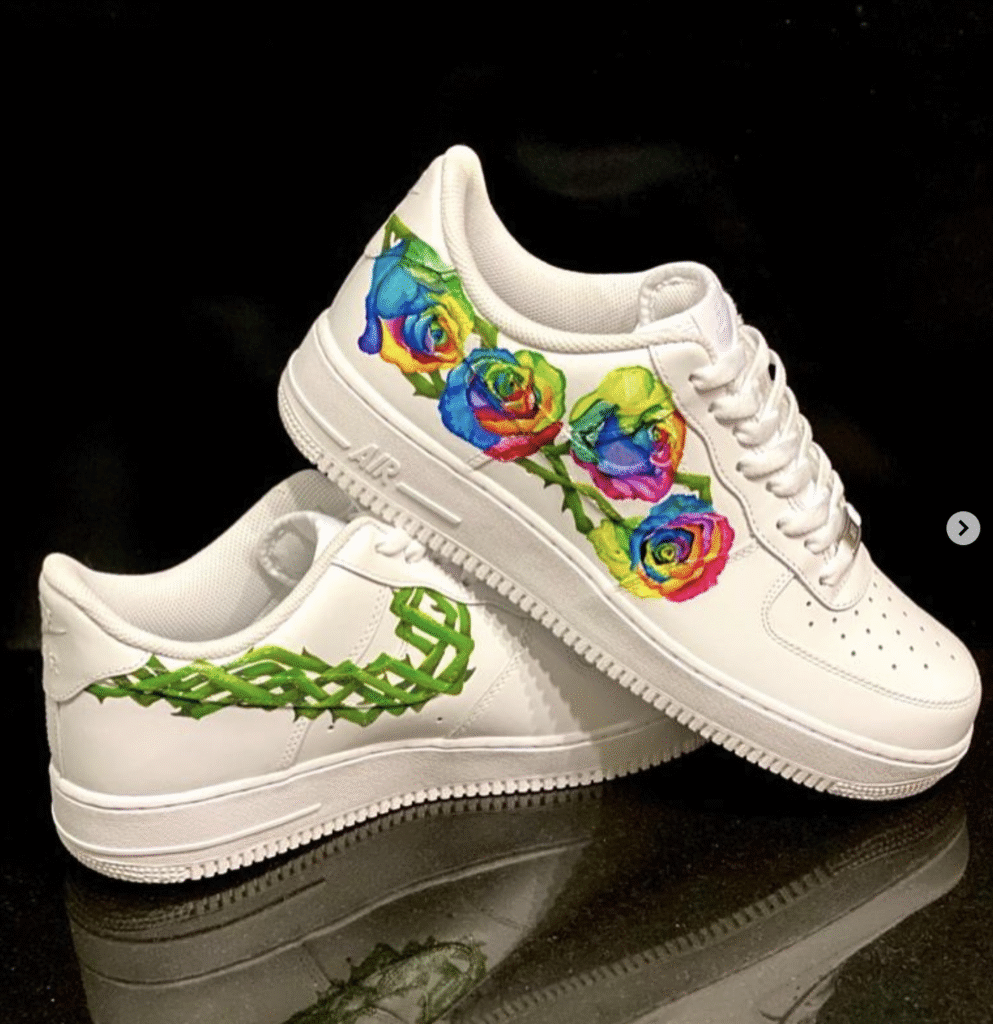
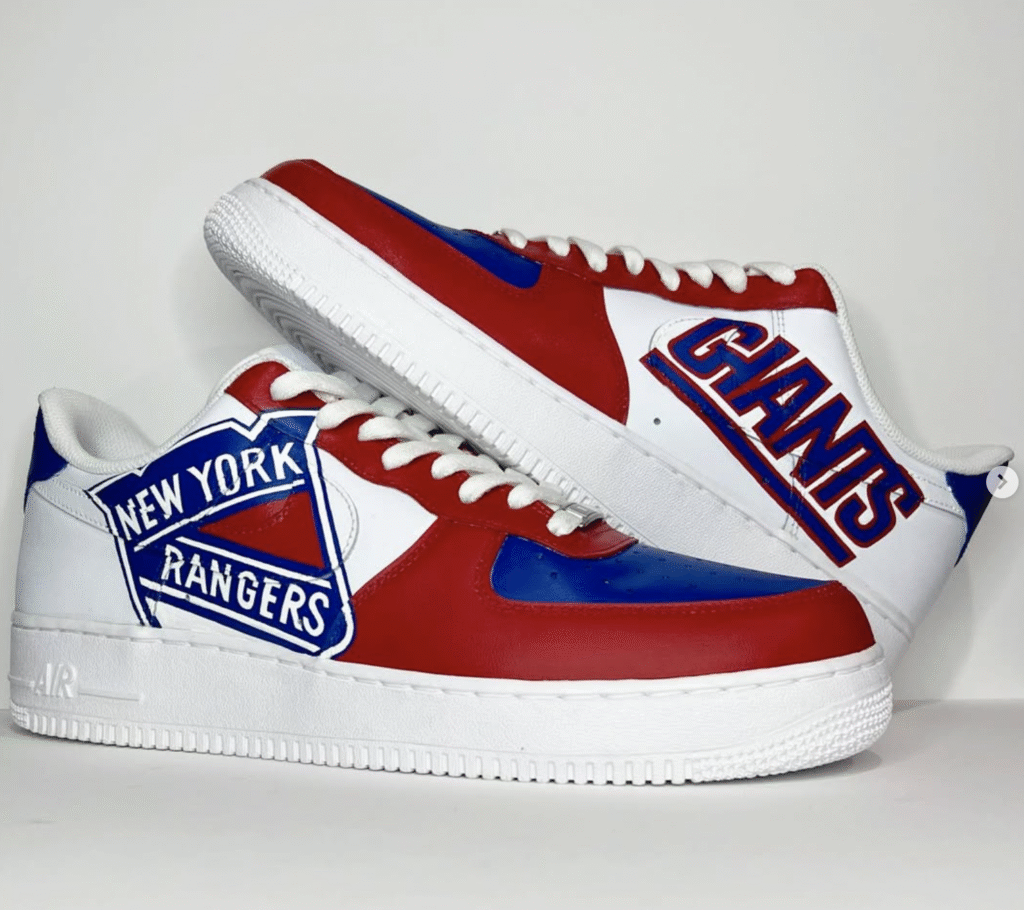
Understanding how the Air Force 1 traveled from basketball courts to Brooklyn blocks, from inner-city fashion to global runways, and from DIY personalization to a multi-million-dollar customization economy requires a journey through history, culture, music, and design. And it begins with the story of a shoe that almost disappeared before becoming immortal.
The Origin of a Classic: How the Air Force 1 Redefined Basketball Footwear
When Nike first introduced the Air Force 1 in 1982, it represented a radical departure from the leather basketball designs common at the time. Bruce Kilgore, the visionary designer behind the AF1, wanted to create a shoe that embodied both durability and flexibility, a contradiction that required reinventing the way leather panels were placed and stitched. The sneaker featured a circular outsole traction pattern designed for pivoting on the court, along with a stronger, more supportive upper, making it ideal for the explosive style of play emerging in the NBA.
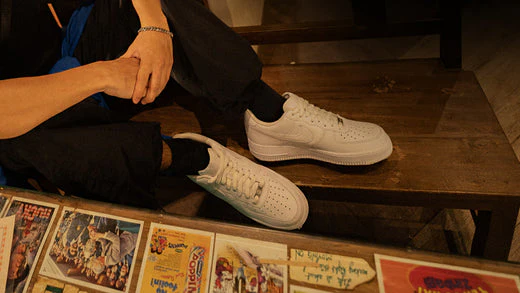
Nike recruited six professional players to promote the shoe, calling them the “Original Six.” Their presence on billboards solidified the AF1’s early credibility, but despite its strong start, Nike temporarily discontinued the model in 1983. The decision stemmed from a common industry practice at the time: frequently cycling through new basketball designs to maintain attention and sales.
What happened next defied industry expectations and changed sneaker culture forever. As stock began to dwindle, consumers in Baltimore, Philadelphia, and New York City aggressively sought out remaining pairs. Boutique shops on the East Coast begged Nike to reissue the sneaker, explaining that local demand showed no signs of slowing. In an unprecedented move, Nike listened not to data, but to the streets. By 1986, the Air Force 1 returned, making it one of the first sneakers ever revived due to grassroots demand. This return marked the beginning of its cultural takeover.
Learn more about the official history of the Air Force 1.
New York City Claims the Air Force 1: A Symbol of Style, Identity, and Community
To understand the rise of the Air Force 1, one must understand New York City in the late 1980s and early 1990s. Hip-hop was rapidly evolving, fashion was deeply localized, and identity was communicated through clothing in ways that reflected neighborhood pride. In this environment, the Air Force 1 found a home.
In Harlem, Brooklyn, the Bronx, and Queens, young people embraced the AF1 because it represented something clean, crisp, and powerful. The all-white pair in particular eventually known as “Uptowns” became an unofficial uniform in many communities. Wearing a fresh pair symbolized pride and attention to detail. People developed rituals around the shoes: avoiding creases, cleaning them regularly, and wearing them for specific occasions. Over time, the phrase “don’t step on my Uptowns” became almost a cultural anthem.
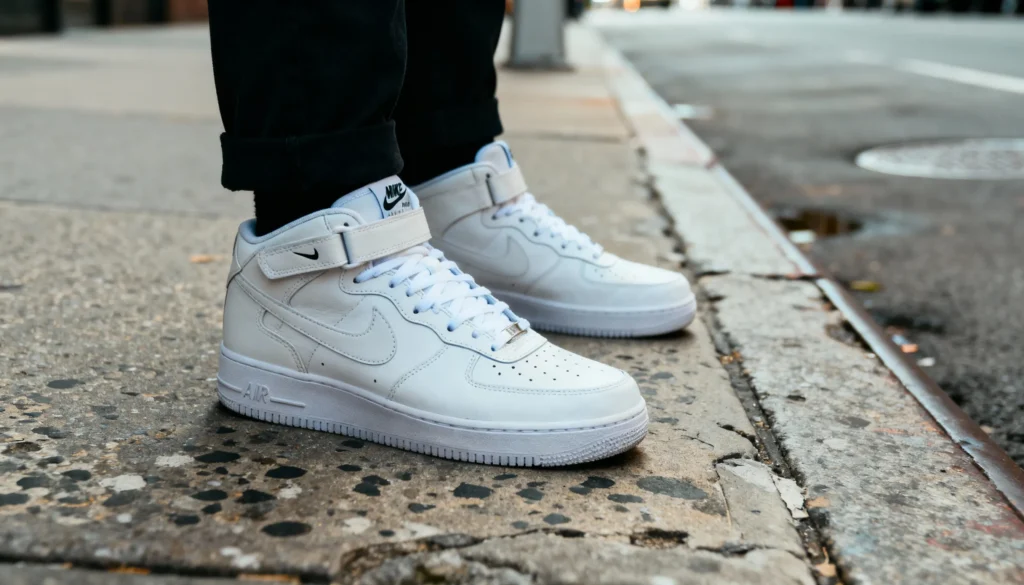
Local shops like Dr. Jay’s, V.I.M., Jimmy Jazz, and mom-and-pop sneaker stores played an enormous role in spreading the Air Force 1 throughout New York. They ordered the model in large quantities because they knew their customers wanted it, and over time, the AF1 became a staple of city fashion. It appeared in music videos, album covers, and street-style photography long before social media existed.
The connection deepened as hip-hop grew. Rappers wore Uptowns as part of their signature style, not because Nike asked them to, but because it reflected where they came from. The sneaker was woven into the fabric of everyday life, visible at block parties, basketball courts, subway platforms, and neighborhood gatherings. This organic adoption would eventually help fuel the AF1’s transformation into the world’s leading shoe for customization.
The AF1 and Hip-Hop: Cultural Amplification
If New York City gave the Air Force 1 roots, hip-hop gave it wings. In the 1990s and early 2000s, the AF1 became inseparable from the artists shaping a movement that would eventually dominate global culture. The sneaker appeared on the feet of MCs, DJs, dancers, producers, and performers across the five boroughs. It was both a fashion choice and a cultural signal.
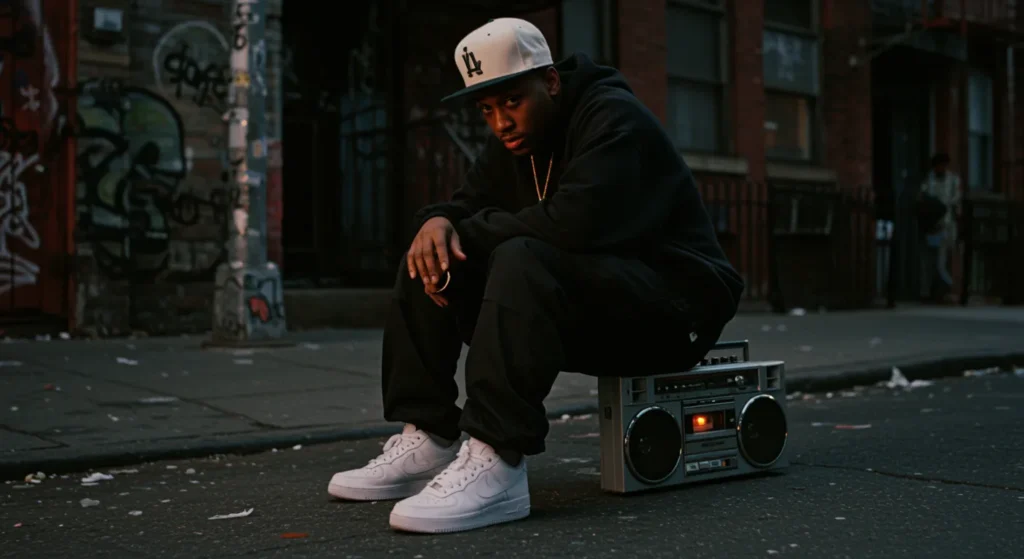
Hip-hop’s visual language made the AF1 iconic. When artists performed on stage or appeared in magazine spreads wearing Uptowns, the sneaker’s appeal surged. Cam’ron’s Harlem swagger, Jay-Z’s clean lines, Nelly’s 2002 hit “Air Force Ones,” and numerous music-video appearances helped redefine the shoe as a symbol of prestige and authenticity. The AF1 became a barometer of style, representing a blend of luxury and street credibility unmatched at the time.
This era also marks the beginning of the sneaker’s deeper connection to customization. Musicians frequently requested unique pairs for performances or album shoots. Designers responded with one-off creations featuring custom colors, patterns, and embellishments. These early collaborations paved the way for the multi-faceted custom sneaker industry that would later explode online.
Over time, the Air Force 1’s cultural impact became undeniable, appearing on album covers, music videos, and city streets. Finish Line covers the detailed history of the AF1.
Why the Air Force 1 Became the Ultimate Custom Sneaker Canvas
Many sneakers have been customized over the years, but none have rivaled the Air Force 1’s influence in the world of custom footwear. Several factors contributed to its dominance, creating a perfect storm for artistic innovation and market growth:
Structural Advantage:
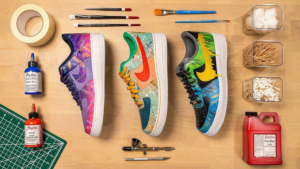
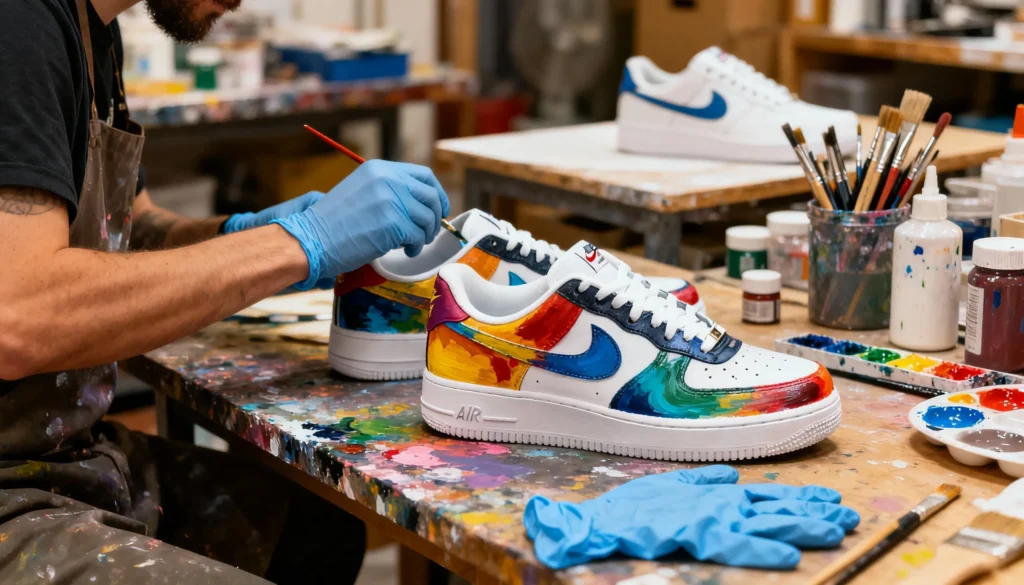
The AF1’s smooth leather panels provide the ideal painting surface. Customizers value consistency, and the AF1 delivers with its predictable material behavior, broad toe box, and minimal stitching. Unlike more complex sneakers with mesh or textured materials, the AF1 allows for precise detail and clean lines.
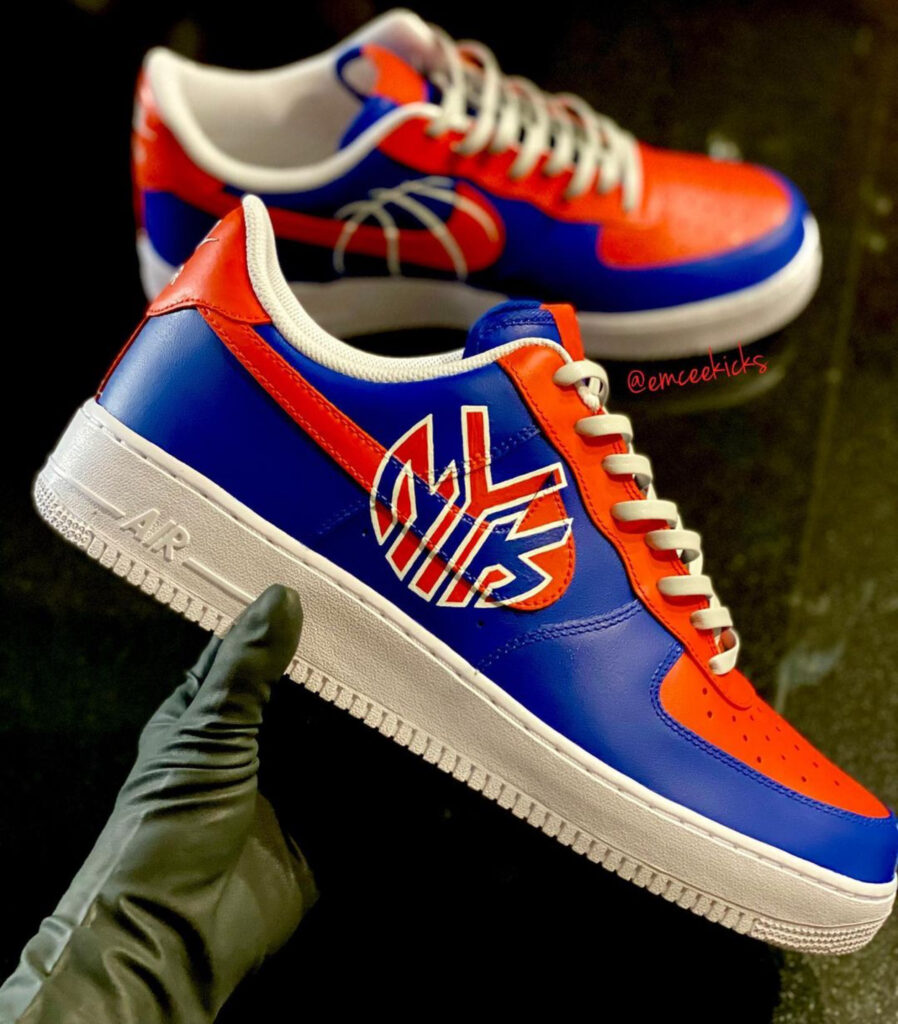
Cultural Significance: Because the AF1 holds deep emotional resonance in communities, especially in New York, customization is more meaningful. Artists often tailor their designs to represent borough pride, graffiti influences, hip-hop icons, or personal stories tied to the city. This storytelling quality makes custom AF1s feel like wearable art.
Availability: The Air Force 1 remains one of Nike’s most reliably stocked sneakers. This stable supply allows customizers to operate sustainable businesses without worrying about product scarcity. A top keywords list confirms the scale of this demand with high-volume queries like custom sneakers, custom shoes Air Force 1, custom sneakers New York, custom sneaker workshop near me, and custom sneakers design all landing at the top of search patterns for the customization market.
Social Media Impact: Platforms like Instagram, TikTok, and YouTube allowed custom sneaker artists to film time-lapse paint sessions, behind-the-scenes tutorials, and final design reveals. The Air Force 1 became a visual star instantly recognizable, photogenic, and versatile.
Nike Support: Nike reinforced the AF1’s custom-friendly status with its Nike By You portal, encouraging consumers to experiment with personalized colorways and materials.
Its smooth leather panels, availability, and cultural significance made the AF1 the ultimate canvas for artistic innovation. WWD highlights the historical significance of the AF1.
New York City: The Heart of the Global Custom Sneaker Movement
While custom sneakers now thrive worldwide, New York City remains the epicenter of the movement. The city’s legacy in customization started long before the internet popularized the art form. In the early 1990s, young creators in Harlem, the Bronx, and Brooklyn experimented with fabric dyes, acrylic paints, markers, and unique lacing styles. Their designs were mostly local, crafted for friends, family, or block-party fashion.
As time passed, these early creators became mentors, influencers, and in some cases, collaborators with major brands. Their studios grew into small businesses. Some eventually opened retail spaces or offered custom services for celebrities, athletes, and sneaker collectors.
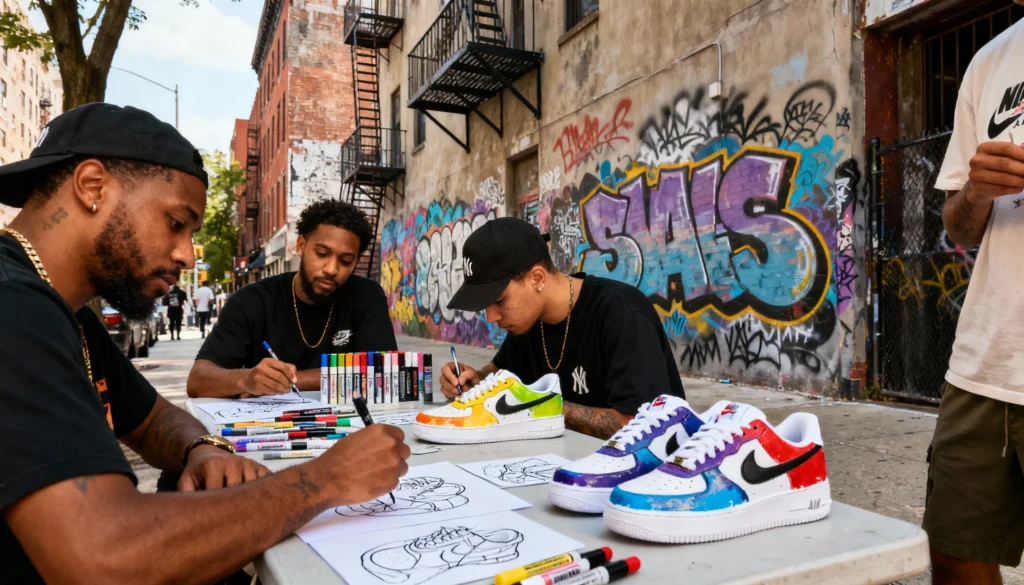
Brooklyn emerged as a hub for boutique custom studios blending fine-art techniques with street culture themes. Queens and the Bronx became known for workshops where upcoming artists could learn prep work, painting, and finishing techniques. Manhattan’s SoHo area embraced the high-fashion side of customization, hosting galleries, pop-up events, and premium custom sneaker installations.
The demand for education in custom sneaker art created an entirely new subculture. Search interest in custom sneaker workshop NYC and custom sneaker painting NYC remains strong, showing that creators still flock to the city to learn and collaborate.
Today, NYC artists influence global trends through designs inspired by graffiti murals, subway fonts, borough symbols, legendary rappers, and iconic city moments. In this ecosystem, the Air Force 1 remains the centerpiece honored for its history, versatility, and deep connection to New York identity.
The city’s neighborhoods, artists, and sneaker shops created a culture that still inspires creators today. StockX explores the Air Force 1’s influence in New York City.
The Digital Era: How the Internet Turned Custom AF1s Into a Worldwide Phenomenon
Social media transformed the custom sneaker world in ways that traditional fashion industries could never predict. The Air Force 1, with its clean design and wide appeal, became the hero of online customization content.
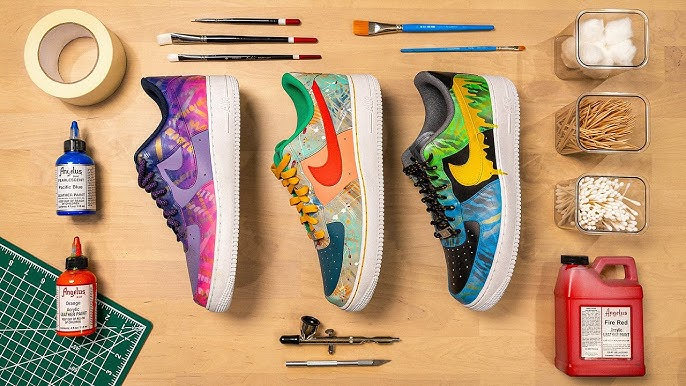
Creators posted painting tutorials, design challenges, and reveal videos featuring custom AF1s. Some artists built six-figure businesses through Etsy or Instagram sales alone. The sneaker’s broad panels made it ideal for showcasing pop-culture designs like anime characters, sports teams, luxury-brand patterns, or abstract artwork.
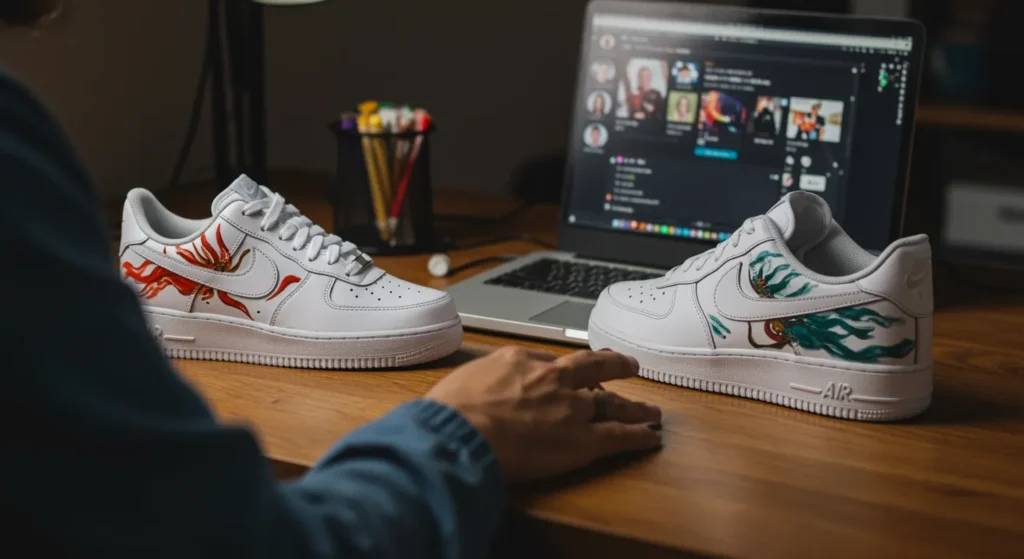
Search trends reflect this digital explosion. Terms like custom sneakers design your own, custom sneaker kit, custom sneakers men, and custom sneakers women consistently appear across consumer searches. These patterns point to a market not only interested in buying custom sneakers but also in learning how to make them.
Younger creators use digital tools to mock up designs before painting, blending traditional craftsmanship with modern technology. Some use laser engraving, hydro-dipping, or 3D-printed accessories to push the boundaries of what custom AF1s can be.
The internet also changed the perception of customs. What once was niche is now a respected art form, with custom AF1s displayed in galleries, featured in brand campaigns, and recognized as legitimate creative expression.
Customization as a Form of Cultural Preservation
Customizing the Air Force 1 is not only an artistic practice. It is a way of preserving cultural stories. In New York, many artists create AF1s that embody the spirit of neighborhoods, historical moments, or influential individuals.
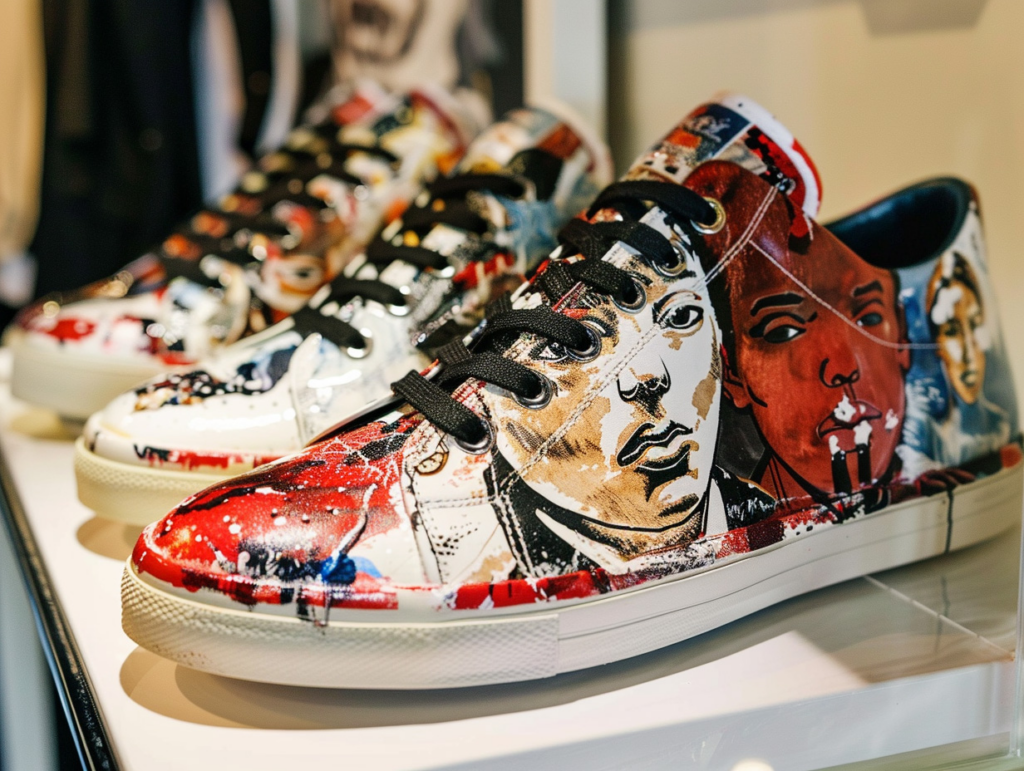
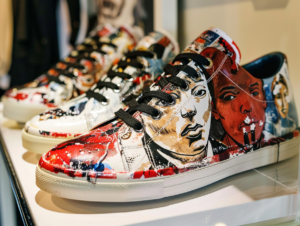
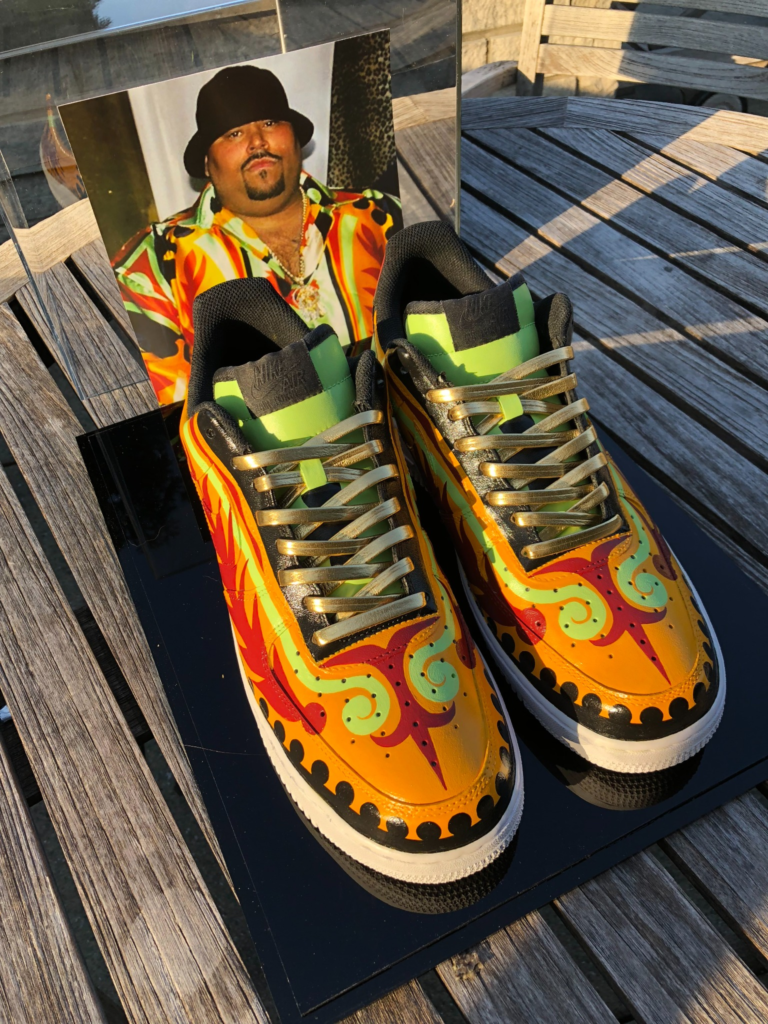
Designs inspired by Biggie, Aaliyah, the Apollo Theater, graffiti legends, and subway motifs carry emotional resonance. Custom pairs created for memorials or community events serve as wearable tributes. Borough-themed customs, Harlem reds, Brooklyn blacks and yellows, Bronx graffiti palettes, an honor hometown pride.
This storytelling aspect is one reason why custom AF1s resonate so strongly with collectors, musicians, athletes, and everyday sneaker enthusiasts. Each pair becomes a narrative, reflecting identity and personal history through design.

The Modern Economy of Custom Sneakers
The market for custom sneakers is now a thriving global economy, with the Air Force 1 leading the charge. Independent creators build full businesses around custom AF1s, offering services ranging from basic color swaps to complex concept art. Some artists specialize in restorations and repainting, while others focus on specialty designs for weddings, birthdays, music videos, and brand campaigns.
Platforms like Etsy, Instagram, TikTok Shop, and independent e-commerce stores allow artists to reach clients worldwide. Consumers searching for custom sneakers under $200, custom sneaker painting, or custom sneakers New York create a continuous stream of demand that sustains the industry. These long-tail keyword patterns are reflected across many datasets and continue to grow annually.
Major brands have taken notice. Collaborations between Nike and artists inspired by custom culture have grown more frequent, blurring the lines between factory releases and handcrafted designs. This shift legitimizes the custom sneaker world and integrates it into mainstream fashion.
The Future of the Air Force 1 and Custom Sneaker Culture
The future of the Air Force 1 is as bright as its past. As technology evolves, customization methods will expand. Artists now experiment with AI-generated design concepts, digital pattern mapping, and advanced paint materials designed specifically for leather. The AF1 continues to adapt, performing as well in a futuristic digital workshop as it once did on New York City sidewalks.
New York remains the heart of this movement. Its legacy shapes how creators think about sneaker art, blending fashion, identity, musical heritage, and storytelling. The AF1 is woven into the city’s cultural DNA, and as long as there are artists with ideas, the sneaker will remain an endlessly reimagined canvas.
Customization is no longer a trend—it is an essential component of modern sneaker culture. And at the center of it all is the Air Force 1, ready for the next generation to leave their mark.
Conclusion: Why the Air Force 1 Will Always Belong to NYC and to Creators Everywhere
Every painted panel represents a new chapter in a story that began on New York streets and continues across the globe. The Air Force 1 is more than a sneaker. It is a movement. And the next pair you design might just become a part of that legacy.
The story of the Nike Air Force 1 is ultimately a story about people. While Nike invented the silhouette, New York City made it immortal. It was the young people of Harlem, Brooklyn, the Bronx, and Queens who adopted the AF1, elevated it, customized it, and passed it from one generation to the next. It was hip-hop artists who turned a sneaker into a symbol. It was painters, designers, and creative innovators who transformed the AF1 into the world’s most important canvas for customization.
Today, custom Air Force 1s represent a fusion of art, culture, identity, and hustle. They symbolize personal expression and the belief that style can be shaped by imagination rather than rules. They remind us that design belongs to everyone—not just corporations or fashion houses, but communities and creators who define what culture looks like.
And for anyone ready to explore the world of custom sneakers, the Air Force 1 remains the perfect place to begin. Its history is rich, its cultural roots are deep, and its future is limitless.