Overview
Customizing Air Force 1s by replicating famous artworks can turn sneakers into wearable masterpieces. Discover how top sneaker artists bring art to soles, and learn techniques, tips and ethical rules.
Introduction
In the realm of sneaker culture, one of the most compelling developments in recent years is the transformation of a simple white leather sneaker particularly the Nike Air Force 1 into a canvas for high-art replication. What once might have been a blank base for subtle accent coloring or simple graphic motifs is now becoming a moving, wearable gallery, where iconic works of modern and contemporary art are re-imagined across the guardtopped sole, side panels, tongue and heel counter. A pair of Air Force 1s hand-painted or air-brushed with a derivative of a famous piece: say, a Kandinsky composition, a Basquiat figure, a Monet water-lily glint, or even a street-style graphic riff on Warhol’s silkscreens offers more than footwear. It’s an intersection of sneaker culture, fine art homage (and sometimes replication), personal style and collector appeal.
That trend is not purely aesthetic: it reflects the merging of sneaker culture’s “drops, hype, limited editions” logic with art-world logic of uniqueness, provenance, and expressiveness. The sneaker becomes both practical and deeply symbolic. In the hands of skilled customizers, the Air Force 1 evolves into a bespoke piece of wearable art with narrative, emotion, and labor.
In this blog we’ll explore how to replicate well-known art on custom Air Force 1s from start to finish: the why and how of choosing art to replicate, sourcing the base sneaker, the prep, the materials, the execution, protecting the work, finishing and presenting it. We’ll spotlight leading sneaker-artists who specialize in this practice including Marissa Confair of eMCee Kicks and Cassy Karyshyn of Cassy Kustoms and examine what they do, how they do it, and what you can learn from them. We’ll also consider the ethical, legal and commercial implications of replicating famous works of art on sneakers: what counts as “inspiration” vs “replication”, when licensing or permissions matter, how to value such pieces, and how to avoid common pitfalls. By the end you’ll have a clear roadmap for creating your own custom Air Force 1 art-replicas (or commissioning them) with confidence.
Let’s dive in.
The Intersection of Sneaker Culture and Art
Sneakers have long been more than performance footwear: they are status symbols, cultural signifiers and objects of style. Over the last decade, the rise of “sneakerheads” and the secondary market has turned sneakers into collectible art pieces in their own right. But beyond limited-edition releases and collaborations, what happens when the sneaker itself becomes a blank canvas and is treated by an artist as such?
How Customization Became Big
The precedent for customizing sneakers is old. Graffiti artists, street artists and hobbyists have been modifying base sneakers for years painting, air-brushing, applying patches, adding 3D elements. But the practice has grown more refined and commercialized: dedicated sneaker custom-artists now offer professional services, commissions, workshops and even live-event customizations. For example, eMCee Kicks offers custom orders and live design events. (eMCee Kicks) Customization now includes full repaints and protective coatings.
Why the Air Force 1
The Nike Air Force 1 has achieved icon status for multiple reasons. It has a relatively simple silhouette, large flat leather panels amenable to artwork, and a cultural legacy (originally released in 1982) in street, basketball and sneaker culture. Because the panels are broad and the shoe is sturdy, it offers a good canvas for custom art.
Many custom artists explicitly list Air Force 1s in their offerings. (Confair’s site mentions Air Force 1s as a model they customize.) (eMCee Kicks) The combination of familiarity, silhouette recognizability and ease of customization makes the AF1 a go-to for art-replica projects.
Art on Foot: Why Replicate Well-Known Art?
Replicating a well-known artwork on a sneaker is more than “just painting something pretty”. The appeal stems from:
- Cultural resonance: A famous painting carries meaning, history, icons and recognition. Wearing it (on your feet!) becomes a statement.
- Visual impact: The familiarity of an image (for example, a Mondrian grid, a Pollock drip, a Basquiat crown figure) amplifies the visual punch of the sneaker.
- Conversation piece / collector value: The more recognizable the source art, the more the sneaker attracts attention and potentially value.
- Creative re-interpretation: Some customizers don’t simply copy the art. they embed elements of the sneaker culture, color-shifts, textures, street-style tweaks. That fusion is unique.
- Wearable portfolio / branding: For custom artists it showcases their skill: to convincingly replicate a well-known work in miniature (on leather, on curved surfaces) is a mark of mastery.
For all these reasons, replicating well-known art on Air Force 1s has become a niche but vibrant part of the custom-sneaker world.
Profiles of Top Sneaker Artists in the Replication Space
Let’s take a look at some of the leading artists specialized in custom-sneaker art and replication, and what they bring to the table.
Marissa Confair of eMCee Kicks


Marissa Confair is the founder of eMCee Kicks (also styled “eMCee Kicks” or “eMCeeKicks”), based in New York City. Her background: the brand began as eMCee Apparel (2015) focused on hand-painted apparel; from there it expanded into custom sneakers in 2018. (Etsy) According to the website, “Marissa Confair is NYC’s top sneaker artist, renowned for her bold designs and meticulous craftsmanship. Her custom creations have caught the attention of A-list celebrities across sports and entertainment.” (eMCee Kicks)
Some details of her operation:
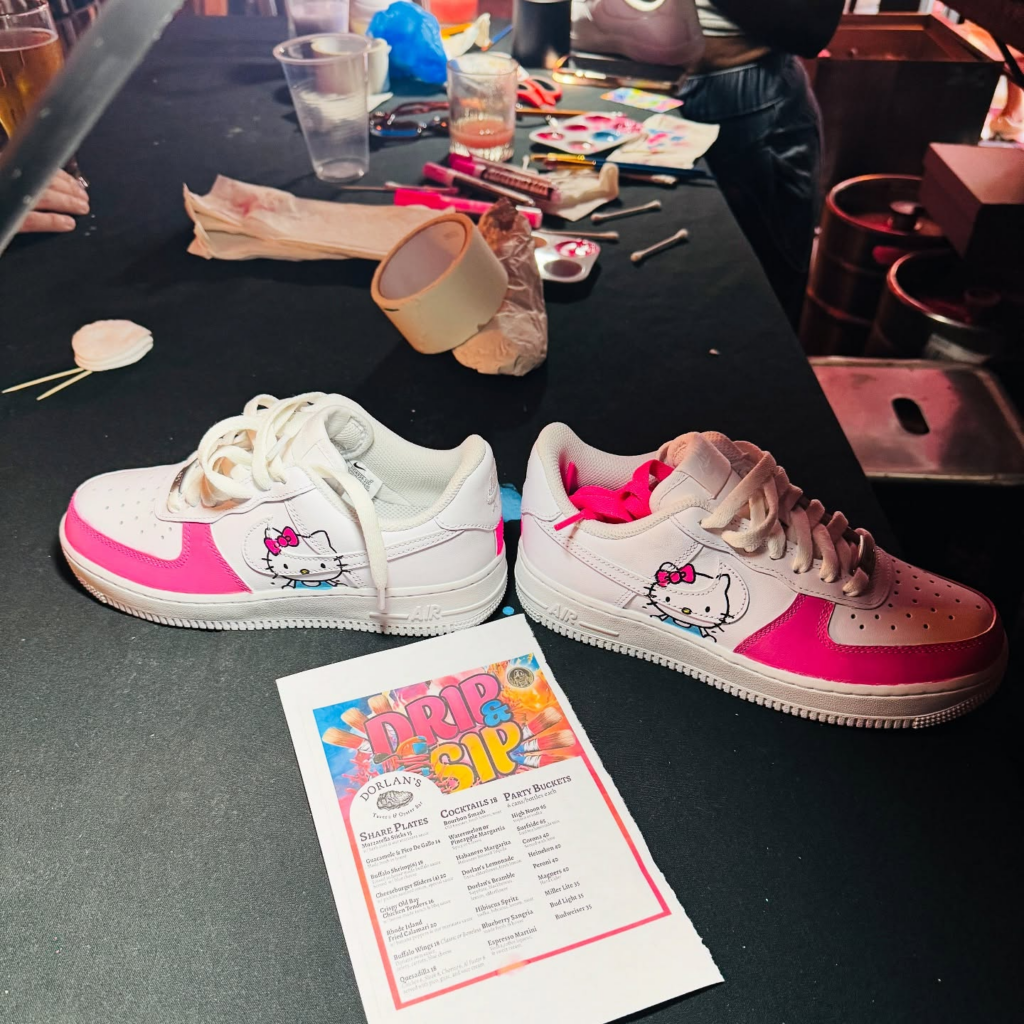
- eMCee Kicks offers custom orders, workshops and live customization events where you can “see the transformation unfold”. (eMCee Kicks)
- Their portfolio includes many custom Air Force 1s. The process emphasises one-of-a-kind, hand-painted designs and uses protective coatings. (eMCee Kicks)
- In a culture-feature piece, we previously described on KicksRemixed how Confair’s work has captured the fusion of music and sneakers: “Marissa Confair has perfectly captured this fusion, creating standout custom sneakers inspired by iconic music artists.” (Kicks Remixed)
Her work in replicating or drawing on cultural iconography is strong: while she may not always do exact art-replicas, her ability to translate strong visual motifs onto sneakers is among the best in the field.
Cassy Karyshyn (Cassy Kustoms)


Cassy Karyshyn, operating under the name Cassy Kustoms, is another prominent figure in the sneaker custom-art world. She painted her first pair of custom shoes at age sixteen and has since developed a strong social-media presence (@cassykustoms) with over 100k followers. (Canvas Rebel)
Her website emphasises “luxury sneaker art” and bespoke design work. The offerings include completely custom designs, color-stories, scene coatings and a high level of finishing. (Cassy Kustoms)
In an interview, Cassy reflected on risk, creativity and client relationships: “Working together with Cassy was like being wrapped in a blanket of creativity and love.” (Cassy Kustoms)
While her work is not always publicised as “art-replication” (i.e., painting a famous fine-art work exactly), she clearly works in that sphere of converting artful composition, scene painting and graphic design into sneaker form.
Other Notable Mentions
While the focus of this essay is on Confair and Karyshyn, it’s worth noting that the custom-sneaker replication space has others. For instance, Van Taylor Monroe III (aka Van Monroe) is known for his custom hand-painted Air Force 1s including the “Obama ’08” pair requested by the Smithsonian Institution. (Wikipedia) Though the aesthetic is more figurative portraiture than abstract art replication, the craft is similar: sneakers become bespoke art canvases.
For the purposes of this blog, we will emphasise the practice of replicating well-known art (especially modern/contemporary art) on the Air Force 1, and refer to Confair and Karyshyn as exemplars of high-level craft in that area.
Why Replicating Well-Known Art on Air Force 1s Matters
Before diving into technique, it’s worth exploring why this niche resonates so strongly. Customizing a sneaker is personal; replicating a well-known artwork elevates it to cultural statement.
Amplifying Visual Impact
Using a well-known artwork adds instant visual and cultural weight. The viewer doesn’t just see “pretty colors”; they recognise a reference, a motif, a lineage. For example, if one replicates a Mondrian geometric grid, the viewer recognises the art-history lineage and sees the sneaker as commentary rather than just decor. That increases engagement, conversation and value.
Storytelling & Identity
Wearers of such sneakers are not simply wearing “cool shoes”. they are wearing a story. A customized pair that replicates, say, a Basquiat figure or a Keith Haring icon signals not just sneaker taste, but art sensibility, cultural awareness and personal identity. For custom artists, this means the shoe becomes a wearable portfolio piece. For the wearer, it becomes a walking statement of identity.
Collectibility
From a collector’s standpoint, a limited-edition or one-off custom sneaker that successfully replicates a famous artwork becomes a hybrid between sneaker and art-object. Just as limited-edition prints of an artist’s work have provenance, so too can custom sneakers especially when crafted by recognized artisans like Confair or Karyshyn. The value thus becomes not only “sneaker” but “wearable art”.
Creative Challenge and Skill Showcase
For the artist, replicating a well-known artwork on the curved, stitched, sometimes awkward leather panels of an Air Force 1 is a real technical challenge: distortions, seams, stitching, mid-sole edges all intervene. Successfully doing so shows mastery of surface prep, scaling, color matching, control and finishing. In the custom-sneaker world, this is what separates hobbyist from pro. For example, eMCee’s website emphasizes “meticulous craftsmanship”. (eMCee Kicks)
Cultural Fusion
Sneaker culture, street art culture, fine-art culture and fashion culture intersect in these pieces. Customizing a sneaker with fine-art references bridges ‘high’ and ‘street’ art worlds. It creates hybrid cultural objects that resonate with multiple audiences. This fusion is part of what gives the practice its energy and appeal.
Given this strong justification for the practice, it’s time to turn to the how-to: how one actually executes such a project.
Step-by-Step: How to Replicate a Well-Known Artwork on an Air Force 1
Here’s a detailed roadmap covering from concept to finished piece. While professional custom-artists will have their own workflow, this map will guide you through the key stages, decision points and best practices.
Concept & Sourcing the Base Sneaker
Choose the base sneaker: Since we’re working with Air Force 1s, you’ll want to pick the version that suits your intent. A “plain white leather” Air Force 1 Low is often easiest (maximized flat white panels). Ensure the leather is of decent quality (not peeling cheap leather) so it holds paint/coating well.
Select the artwork to replicate: Decide which piece of well-known art you will replicate. Ask: is the piece graphic enough to survive miniaturization onto a shoe? Are the colors reproducible on leather? Does the composition fit the sneaker panels?
Consider the size/framing: The Air Force 1 doesn’t offer a flat rectangular canvas like a museum painting. You must consider how to map the artwork: side panels, heel panel, tongue, lace guard, midsole. Sometimes you may condense or crop elements. Consider splitting the artwork across both shoes (left and right) for a panoramic effect.
Reference imagery collection: Acquire high-resolution images of the artwork. If possible, get multiple angles/crop variants to allow you to plan splitting the image across the shoe.
Color-matching: Note the exact palette of the artwork. The customist may need to mix custom colors. It’s helpful to create swatches and test before applying to the shoe.
Surface condition & size: The base shoe should be properly cleaned and prepped (more on that soon). Also check that the shoe is unworn (unless you want a “worn” aesthetic) and free of scuffs, dirt, etc.
Preparation & Materials
Cleaning: Remove laces, insoles if possible (or work around them). Use a gentle leather cleaner or mild soap to remove surface dirt, oils, factory finish residues. Allow the shoe to thoroughly dry.
De-glossing / Light sanding: Many customizers lightly scuff or sand the leather panels (with very fine grit sandpaper) to give paint better adhesion. Be cautious: too rough will damage leather. After scuffing, wipe away dust.
Masking/taping: Use painter’s tape to mask off areas you don’t want to paint (laces, outsole, midsole white edge if you want to keep it, swoosh or other branding if you want it untouched). Some custom artists may remove or cover out existing branding with their art or replace it.
Priming / base-coat: On white leather the base white can be fine; if the surface is off-white or has variations you might apply a white acrylic base coat for uniformity. Some custom-artists use specialized sneaker-paint primers (such as Angelus leather preparer & deglazer).
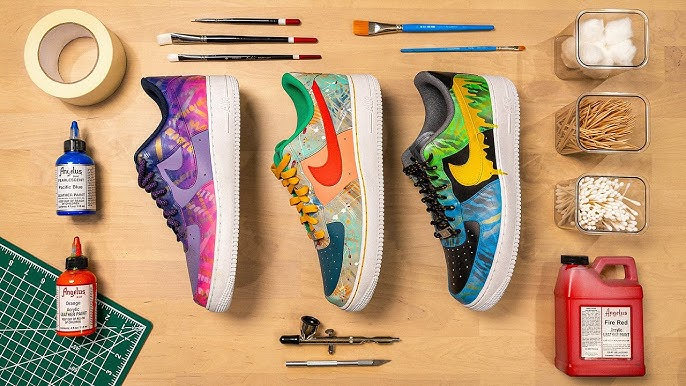
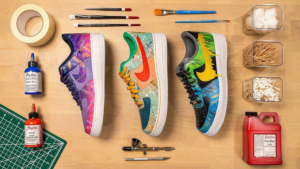
Choosing paint/mediums: For leather sneakers, high-quality acrylic leather paints (e.g., from Angelus, Jacquard) are common. Some customizers use airbrush with urethane paints for smoother gradations. If you’re replicating a painterly artwork (e.g., Monet) you may need multiple mediums (brush, airbrush, sponges). Also a sneaker-specific finisher (sealant) is needed to protect the artwork later.
Brushes/airbrush equipment: Fine detail brushes for line work, stencils if needed, possibly an airbrush setup if you have gradients, fades, or large area coverage.
Workspace & ventilation: Good lighting, clean dust-free surface, proper ventilation (for spray sealants or airbrush).
Mock‐up planning: Some artists draw the layout on tracing paper, or lightly pencil lines on the sneaker (very lightly) to map the artwork relative to the panels/seams. You may align features of the painting to the shoe’s design (for example, aligning a strong vertical line of the painting with the shoe’s heel tab seam).
Test swatches: It’s wise to test your paint on a spare (or inside tongue) panel to check adhesion, color, finish, and durability.
Execution: Transferring the Artwork
Scaling and distortion compensation: Because the shoe panels curve, and the seams interrupt the image, you’ll need to distort or break up the artwork accordingly. Some customizers map major “anchor” elements (e.g., a head, a face, a bold shape) onto the flattest panel (side panel). Then they extend supporting imagery across adjacent panels (toe box, heel).
Drawing/Outlining: After planning, lightly sketch the main outlines or key forms onto the shoe with a pencil or light marker (erasable). For replication, you may wish to project the artwork onto the shoe (with overhead projector or transparent sheet) to get proportions correct. Some customists use a water-soluble marker that can be erased after painting.
Block-in colour/areas: Start with large colour blocks, replicating the artwork’s main fields. For example, if you replicate a Mondrian grid, paint the large colored rectangles first (red, blue, yellow) and the black grid lines afterward. If a painterly work, block general tones before moving into detail.
Line work and detail: Once major areas are in place, gradually move to the finer details: shapes, textures, blending, shading. Use thin brushes for crisp lines, or airbrush/sponge for soft transitions. In replicating a well-known piece, accuracy of line and proportion matters (since the viewer knows the original).
Handle seams and texture: The shoe’s stitching, perforations, and panel changes will interrupt your artwork. Decide early how to treat them: will you design around them (i.e., avoid placing important lines over them) or incorporate them as part of the art (e.g., treat the seams as added texture)? Good customizers integrate the shoe architecture into the design.
Layering: Some artworks have layered textures or glazes; you may need to build layers of paint, allow drying time between, then glaze or wipe to replicate the effect. Patience is key: rushing layers can cause cracking or adhesion issues.
Color matching and consistency: Because you’re replicating a known work, ensure the colors are consistent across both shoes (if you are doing a pair) and match the original. The mix may need to be documented (e.g., “Red = Pantone 185C + 5% white”). You might keep swatches of each color used.
Transition across both shoes: If your design straddles both the left and right shoe (for example, a panoramic painting), ensure continuity: when the shoes are placed side by side, the art flows. Customizers sometimes place numbers or signatures to indicate correct orientation (“Left → Right”).
Correcting mistakes: Minor mistakes are inevitable. Use fine brushes or cotton-swabs to clean up edges, or lightly scuff and repaint small sections. Avoid layering too many times in one spot (which can cause stiff leather).
Branding and logos: Decide if you’ll preserve the Nike swoosh, the AF1 heel tab, or cover it with your artwork. Many customizers incorporate the branding into their design creatively. If one replicates a famous artwork, you may wish to leave brand elements visible (for sneaker authenticity).
Signature/Artist mark: Many custom artists sign the shoe discreetly (inside tongue, or under heel tab) as their unique touch. It’s good practice if you plan to sell or show the piece.
Finishing & Protection
Drying time: Allow full drying of paint (often 24-48 hours, sometimes more) before sealing.
Sealant/top-coat: To protect the painted artwork from scuffs, creases, moisture, many customizers apply a transparent leather finisher (e.g., an acrylic finisher or a sneaker-specific clear coat). eMCee’s website explicitly notes: “a protective layer is applied to ensure your custom sneakers are durable for regular wear.” (eMCee Kicks) It’s crucial: no matter how beautiful the paintwork, if it rubs off or cracks on first wear, the value and appeal drop.
Mid-sole/outsole treatment: If you left the mid-sole white and untouched, you may wish to apply a protector (e.g., sneaker white leather guard) to keep the sole crisp. If you painted the mid-sole too, treat it as you would the upper.
Laces and insoles: Decide whether to replace these (e.g., custom-printed laces, matching art motif laces, or keep stock laces). A matching insole graphic can elevate the final presentation.
Packaging/Presentation: Many custom works come in custom boxes, dust bags, or with authenticity cards (e.g., this piece hand-painted by Marissa Confair). This matters for collector value and presentation. eMCee’s site mentions “one-of-a-kind” and “wearable art”. (eMCee Kicks)
Care instructions: Provide or keep instructions: avoid water, keep away from abrasive surfaces, spot-clean only, avoid folding/sharp bends of the upper, store in box away from direct sunlight. This preserves the paint and leather.
Photography/documentation: If you plan to document or sell, photograph the piece under good lighting (both shoes, left & right together, close-ups of detail). Keep digital records of the work process if applicable.
Wearing, Displaying & Resale
Wear vs display: Decide whether the piece is meant for wearing or display. Some collectors will treat it like art (keep in box). Others wear it. If you intend to wear, accept that creasing and wear will occur; some customizers reinforce the paint at stress zones (toe box).
Resale potential: A well-executed custom sneaker replicating a famous artwork from a recognized artist (Confair/Karyshyn) can appreciate in value. Ensure you maintain provenance (artist signature, documentation).
Display options: For display-only pieces, you might mount them in a glass case, use shoe stands, or display on a shelf. You can also produce limited-edition prints or photograph series of the piece.
Insurance/valuation: If the piece becomes valuable, consider documenting value (artist’s invoice, date, photo) for insurance purposes.
Legal & Ethical Considerations of Replicating Famous Art
Replicating a well-known piece of art on a sneaker raises legal and ethical questions. It’s vital to navigate these responsibly.
Copyright and Trademark
Many famous artworks are still under copyright protection (the artist or estate holds rights). Simply replicating the work (even with modification) could infringe copyright if done for commercial sale without permission. Even creating for personal wear may have questions if used in public or promotional contexts.
Trademarks may also apply if the artwork or its style is trademarked. The branding on the sneaker (Nike, etc) adds complexity. If you plan to sell the custom sneakers, you may be in a “derivative work” territory requiring licensing from the artist/estate.
However, there may be exceptions: if the artwork is in the public domain (e.g., older than 70 years after the artist’s death, depending on jurisdiction), copyright might not apply. If the artwork is used in a transformative way (e.g., substantial new creative work, not just a copy) then “fair use” might apply but this is legally risky.
Custom artists sometimes avoid exact replicas and instead create “inspired by” versions (e.g., using the palette or compositional lines but altering characters, names or motifs) to skirt copyright issues. It’s wise to consult an IP attorney if you plan to sell or widely display these.
Credit & Attribution
Even when you legally replicate or are licensed, giving credit to the original artist is good practice. Eg: “Original artwork by Piet Mondrian; sneaker custom by XYZ.” Transparency builds trust, reduces confusion and is ethically sound.
Commercial vs Personal Use
If you’re customizing for your personal use (you buy the base Air Force 1 and have it done for yourself, you don’t sell it), the risk may be lower. But if you’re doing commissions, selling the custom piece or offering it as a service, the legal risks increase. Many custom-artists operate in this space carefully by avoiding exact names/titles or by obtaining licensing.
Moral Rights & Respecting the Artwork
Beyond legal rights, consider the ethical dimension: the original artist may have intended their work to be displayed in certain contexts, and by shrinking it or placing it on an everyday sneaker you are repositioning it. That’s not necessarily bad, but be thoughtful. Ensure that your replication is respectful (no offensive modifications that would undermine the integrity of the artwork).
Agreements & Client Contracts
If you are offering custom replicative work as a business, ensure your client contract covers IP issues: who owns the modified design, can the client sell it in future, are you allowed to photograph and promote your work, how warranties/returns are handled. Good custom artists like eMCee Kicks include FAQs: e.g., “what is the process … what types of sneakers can be customized?” (eMCee Kicks)
Value and Resale Caveats
If you replicate a famous artwork and claim it as “limited edition”, ensure you’re not misrepresenting it. Buyers should know that it is a custom replication and not an original fine-art work. Overstating provenance can lead to legal and ethical issues.
Best Practices & Common Pitfalls
Drawing on the experience of established custom artists, here are best practices and pitfalls to watch out for.
Best Practices
- Use high-quality materials (leather primers, acrylic/urethane paints, proper sealant).
- Always clean and prep the base shoe thoroughly (surface oils are the enemy of adhesion).
- Respect the shoe architecture: seams, stitching, perforations either integrate them into the design or intentionally avoid placing key features over them.
- Map the artwork carefully: consider how the original is adapted to shoe panels.
- Keep color consistency and maintain documentation of your color mixes.
- Allow proper drying and curing time between coats.
- Seal and protect the final piece.
- Provide care instructions to the wearer.
- Photograph the work with good lighting; maintain a portfolio and provenance.
- If selling or publicizing, ensure your rights are clear and contracts exist.
- Stay transparent with clients about wearability vs display (painted leather will crease).
- Name your piece and date it. Consider numbering (e.g., 1/1) for uniqueness.
Common Pitfalls
- Insufficient adhesion: Not prepping leather means paint chips off quickly.
- Cracking at toe box or creases: Because shoe flexes, thick layers of paint can crack when worn.
- Ignoring seams/panel changes: Artwork that crosses confusing seams may appear distorted.
- Poor color matching: If the replication has off colours, the reference to the original art is diluted.
- Over-layering and stiff leather: Too many thick layers make the shoe rigid and uncomfortable to wear.
- Inadequate sealing: Without proper protective finish, scuffs/wear degrade the artwork.
- Mis-leading clients about wearability: If client wants wear daily but design wasn’t built for it (no reinforcements), issues arise.
- Legal exposure: Selling replicas without permissions or misrepresenting works of art.
- Poor documentation: Without good photographs or provenance, resale value drops.
- Pricing mismatch: Under-pricing or over-pricing can harm credibility; know your material/time cost and market.
Case Studies: Art-Replication Projects by Custom Artists
Let’s explore two case studies: one from Marissa Confair / eMCee Kicks and one from Cassy Kustoms, highlighting how they approach the replication or art-inspired custom.
Case Study 1: eMCee Kicks – Music + Art Fusion (Marissa Confair)
While not always pure “fine-art replication”, eMCee Kicks shows how an artist translates cultural iconography (music, art, style) into sneaker form. According to KicksRemixed:
“eMCee Kicks’ artist Marissa Confair has perfectly captured this fusion, creating standout custom sneakers inspired by iconic music artists. From Wu-Tang’s black-and-yellow motif to Pop Smoke’s electrifying blue designs … her work illustrates how music fuels creativity in sneaker culture.” (Kicks Remixed)
While that piece focuses on music rather than art-history works, the underlying process is directly relevant:
- Select cultural icon (e.g., a hip-hop group, album motif)
- Map the visual motif onto the sneaker (e.g., black/yellow panels for Wu-Tang)
- Use bold colors, graphic clarity, strong design lines
- Maintain the sneaker’s identity (the AF1 silhouette) while embedding the cultural layer
In fact, eMCee’s website mentions they customize Air Force 1s among other models and emphasise “hand-painted, one-of-a-kind” designs. (eMCee Kicks)
If eMCee chose to replicate a famous modern-art composition (say, a Mondrian, a Basquiat, or a Keith Haring), the workflow would follow the steps above. The key takeaway from the Confair profile is the seriousness of the craft (clean prep, protective seal, one-of-a-kind mindset) and presentation (workshops, live events). That level of professionalization is instructive.
Case Study 2: Cassy Kustoms – Bespoke Scene & Fine Art Sensibility
Cassy Karyshyn’s practice leans into bespoke, illustrated scene-work on sneakers. On her website:
“Cassy’s work is nothing like I’ve seen before… The craftsmanship and attention to detail were exceptional… vibrant colours and sharp lines with the perfect romantic flair to enhance the wedding attire!” (Cassy Kustoms)
Her approach demonstrates:
- Customising to a client’s personal story (for example, a wedding, travel motif, brand identity)
- Creating high-quality hand-painted designs with a fine-art aesthetic
- Handling color, detail and finishing to gallery-like standard
Although her site doesn’t explicitly highlight “replicating famous artworks”, her style is exactly in the space of high-end sneaker-art whereby fine-art sensibility is applied to footwear. For clients seeking a custom Air Force 1 that replicates, say, a Monet landscape or a Haring figure, an artist like Cassy is ideally positioned. From her interview:
“I painted my first pair of custom shoes at age sixteen… I’ve posted photos of my art on social media under the name Cassy Kustoms.” (Canvas Rebel)
Her social media shows extensive examples of bold, complex designs. (instagram.com)
Thus, her practice serves as a fine-art-snkr model: high technical skill, bespoke service, art-sensitive clientele.
How to Commission or Create a Replica Art Custom Air Force 1
If you’re looking to either commission a custom replicating well-known art or do it yourself (or hire someone), here is a practical guide.
Commissioning a Custom Artist
- Select the artist: Look at portfolio, style, experience in art-replication. E.g., eMCee Kicks, Cassy Kustoms.
- Define the artwork: Specify which work you wish to replicate (artist, title, year) and if you want exact copy or “inspired by”. Discuss the layout (single shoe vs both, panel distribution).
- Agree base sneaker: Air Force 1 low (white) is common; size, condition, whether you supply it or they source it.
- Budget and timeline: Replication means more work, more detail, more cost. eMCee mentions turnaround of 3-12 weeks depending on complexity. (eMCee Kicks)
- Contract and rights: Clarify who owns the finished piece, can the artist photograph and showcase it, can the client sell it later, how wear affects warranty. Confirm IP issues (especially if exact replica).
- Design brief and mock-up: The artist may provide sketches or digital mock-ups of the artwork placement on the shoe. Approve location, color palette, size.
- Progress updates: Some artists offer updates, photos of work-in-progress.
- Delivery and packaging: Once finished, you get the shoes, care instructions, any certificate or artist signature.
- Wear or display: Decide if the piece is for wear or display; follow care guidance.
- After-care: Touch-ups, storage, insurance if piece is collectible.
DIY (If You Have Skills and Materials)
- Follow the step-by-step roadmap above (Concept → Prep → Execution → Finish).
- Work on a practice pair first before your “final” piece.
- Choose a relatively simple artwork for your first replication (fewer colors, crisp lines rather than heavy texture). For example, a Mondrian grid or a Haring figure rather than a thick impasto Monet.
- Document your process (photographs, time logs, paint mix notes). This adds story and value.
- Use high-quality materials (leather paint, proper sealant). Avoid budget craft paint.
- Test wearability after finishing: bend the toe box, lace up the shoe, ensure the paint doesn’t crack or lift.
- If you intend to sell, do your IP homework: is the artwork public domain? If not, consider modifying or creating an “inspired by” variation.
Pricing Considerations
Let’s say for a high-skill custom replicating a famous artwork you might see pricing in the hundreds to low-thousands of USD depending on artist reputation and complexity.
- Materials cost (shoes, paint, sealant, masking tools)
- Time (design, prep, painting, finishing)
- Complexity of artwork (many colors, gradients, fine detail)
- Reputation/brand of the custom artist
- Wearability vs display (display‐only may command higher premium)
- Documentation/provenance (signed, numbered can elevate value)
- Resale potential (if you create something collectible)
Creative Inspiration: Artwork Types & How They Translate to Sneakers
Not all artworks are equally well suited to translation onto an Air Force 1. Here are some categories and how they map.
Geometric/Minimalist Art
Examples: Piet Mondrian, Josef Albers, Ellsworth Kelly
Why good: Clear shapes, crisp lines, limited palette → easier to scale to shoe.
How to translate: Use masking tape to achieve sharp edges, replicate grids across side panels, maintain consistent proportion of rectangles and lines, use high-contrast palette (e.g., black lines + primary colors).
Tip: Pay attention to the shoe’s seams align grid lines with seams or deliberately avoid seams for clean effect.
Figurative/Street Art Style
Examples: Basquiat, Keith Haring, Shepard Fairey
Why good: Strong graphic impact, bold outlines, cultural currency.
How to translate: Use crisp line work for silhouettes, maintain the energy of the figure while adapting to shoe shape, possibly split elements (e.g., figure on left shoe, text on right).
Tip: Use brushes with firm bristles for clean edges, consider using spray for background fill then brushes for figures.
Painterly Landscapes/Textures
Examples: Claude Monet, Vincent van Gogh
Why more challenging: Soft transitions, heavy texture, impasto, subtle color shifts.
How to translate: Use airbrush for gradients, sponges for texture, multiple thin layers of paint, focus on major shapes first before fine detail.
Tip: Because shoes flex and bend, heavy texture may crack; keep paint layers thin and flexible. Focus on impression instead of exact replication of brush strokes.
Abstract Expressionism/Drip/Action Painting
Examples: Jackson Pollock, Helen Frankenthaler
Why good: Energy, spontaneity, less rigid composition so forgiving on shoe surfaces.
How to translate: Use splatter techniques, allow paint drips along mid-sole, treat side panels as painting canvas, include clear droplets.
Tip: Mask out the mid-sole to catch dripping paint; allow drips to happen but stop before they run off entirely; seal thoroughly after.
Typography/Pop Art
Examples: Andy Warhol, Roy Lichtenstein
Why good: Bold graphics, contrasting colors, cultural familiarity.
How to translate: Enlarge halftone dots for Lichtenstein, use bright chromatic colors for Warhol motifs, replicate pop icons on heel tabs.
Tip: Use stencil for halftone dots and clean lines; test print size before painting on the shoe.
By selecting the artwork type accordingly and planning the translation strategy, you increase your chance of success.
Managing Wearability vs Display – The Practical Considerations
Just because your Air Force 1 is painted like a fine art piece doesn’t mean it behaves like one. Here are practical considerations for durability, comfort and long-term upkeep.
Leather Flexing and Paint Cracking
Since sneakers are meant to bend (toe box, side panels), thick or heavy layers of paint become risk points for cracking. Best practice: keep paint layers thin and flexible; use flexible leather paints; allow for proper cure time; apply protective sealant that allows flex. Many custom artists advise clients: these are art-wear shoes, not athletic performance shoes. For example, eMCee’s FAQ says yes, you can wear them, but treat them like art. (eMCee Kicks)
If you intend to primarily display them, then you can afford to be more extravagant. But if you wear them often, consider focusing major artwork on less flex-intensive panels (heel/outer panel rather than toe box) or reinforcing toe box internally.
Cleaning and Care
Painted sneakers require special care:
- Avoid water immersion; use a damp cloth instead.
- Avoid harsh scuffs; the painted surface may scratch.
- Avoid direct sunlight for long periods (which may fade colours).
- Use a dust bag when not wearing.
- Re-apply protective spray as needed (clear acrylic leather finish).
- Keep laces clean and replace if dirty (dirty laces degrade the overall look).
Storage
For display pieces, store in box or a clear acrylic display case. Stuff with tissue to maintain shape. Keep away from moisture and extreme heat (paint and leather degrade in heat).
If you intend to wear them occasionally, rotate them with other sneakers so they aren’t constantly stressed.
Comfort and Fit
Because you may add layers of paint and sealant, the shoe may feel slightly different (stiffer). Test fit after finishing. Sometimes removing insoles or using thinner insoles can help. Some customizers also reinforce stitching or glue to ensure the painted leather panels hold up.
Resale/Value Considerations
If you intend the piece for resale or investment, documentation (artist invoice, date, series number) is vital. Wear reduces value in many collector circles (unless the wear adds aesthetic patina intentionally). Ideally, keep one version unworn for display and another for occasional wear.
Custom artists sometimes offer limited editions (e.g., only five pairs of a specific art-replication theme) which can drive up value.
Marketing & Community – How the Culture Amplifies
The custom-sneaker-art scene thrives not just on individual works but on community, social media, collaboration, and live events. Understanding how that works helps both artists and collectors.
Social Media and Portfolio
Artists like Marissa Confair and Cassy Karyshyn use Instagram and YouTube to show the process (video of painting, time-lapses), finished pieces, client features. For example, Confair posts reels of live customization events. (instagram.com)
This kind of social proof builds brand, attracts commissions and increases value of the work (the more people see and appreciate, the higher demand). For a collector commissioning, check the artist’s social feed: do they document process? Are their finishes high-quality? Are clients happy?
Live Events & Workshops
eMCee Kicks offers live customization events and sneaker-painting workshops. (eMCee Kicks) These are valuable for community building (clients bring their own sneakers, watch the transformation, maybe learn technique). As a collector, attending a live event gives you direct connection with the artist and perhaps a better sense of the craftsmanship.
For the artist, these events accelerate brand awareness, create content, and generate referrals.

Collaborations and Drops
Custom-artists sometimes partner with brands, musicians or events to create limited-edition pieces, raising exposure and value. For example, if an artist customizes an Air Force 1 replicating a famous album cover and launches it alongside a musician, the piece gains both music-culture and art-culture reference. eMCee’s narrative references “music meets sneakers”. (Kicks Remixed)
As a collector: know about upcoming drops, follow the artist for announcements, and if you place custom orders early you may get better pricing or earlier access.
Secondary Market and Resale
The secondary market for custom sneakers is still niche but growing. Platforms like Instagram, bespoke sneaker groups, auctions and custom-sneaker marketplaces exist. When the piece is replicating a well-known artwork, the value may be higher but you must maintain documentation and condition. Some investors treat custom sneakers like limited edition prints of an artist: time, reputation and uniqueness drive value.
As an example of the ecosystem, though not a custom-replica piece, Van Monroe’s “Obama ’08” Air Force 1s ended up in the Smithsonian. (Wikipedia) That kind of provenance elevates the piece beyond “just sneakers”.
What to Expect Cost-, Time- and Value-Wise
Here are realistic expectations for someone looking to create or commission an art-replica Air Force 1.
Time
- Concept & brief: 1-2 weeks (depending on artist and client).
- Base shoe prep: 1-2 days (cleaning/drying).
- Painting/execution: depending on complexity, anywhere from several days to a few weeks. For a full Air Force 1 pair replicating a detailed fine-art painting, perhaps 1-3 weeks of working time.
- Drying/finishing/sealant curing: another few days (often 2-3 days before shoes are ready to wear).
- Total turnaround: Good custom artists indicate 3-12 weeks depending on complexity. E.g., eMCee lists 3-12 weeks. (eMCee Kicks)
Plan accordingly (especially if you want it for a specific event).
Cost
Costs vary widely. Factors raising cost: complex artwork, many colours, high detail, scratch-resistant finishes, “wearable art” packaging, limited edition numbering, high-profile artist.
For a well-known custom artist:
- Basic custom (colour change, simple motif) might run several hundred USD.
- A full art-replication on Air Force 1s might run into the low thousands USD (or more if the artist has celebrity clients, high demand or uses rare materials).
As a ball-park: maybe USD 500–USD 2,500+ depending on variables.
Value & Resale
Value is subjective and depends on: artist reputation, uniqueness (1/1), documentation/provenance, condition (unworn vs worn), cultural significance of the artwork replicated, demand in the custom-sneaker community.
If you replicate a famous artwork (for example, a Basquiat or Warhol) on an AF1 by a known custom artist, keep the documentation: artist invoice, date, photo, care instructions. Photograph condition periodically. If you plan to resell, aim to maintain as-delivered condition (box, dust bag, original laces).
Note that resale value is not guaranteed. Unlike sneakers from major brands with broad secondary demand, custom-sneaker resale is more niche.
Ethical & Cultural Reflection: What This Practice Means
Beyond the technical and commercial side, replicating well-known art on sneakers invites reflection on culture, appropriation, commodification and creative expression.
Wearable Art vs. Consumable Fashion
By turning a fine-art reference into a sneaker, you blur the line between “art to look at” and “fashion to wear”. That is powerful but also raises questions: does the art lose some of its sanctity by being walked in? Does it gain a new vitality by being lived in? There is no fixed answer, but the conversation is rich.
Custom artists who treat their work as “wearable art” (like eMCee stating “wear your story. Walk your statement.”) are consciously making the value shift happen. (eMCee Kicks)
Cultural Access and Democratization
Famous artworks are often locked into galleries and museums; placing them on sneakers is a way to democratize access (you walk in them, you own them). It’s a subversion of the elite art sphere. Custom sneakers can become personal art pieces rather than remote gallery objects.
However, this also intersects with issues of appropriation: replicating artworks from historically marginalised artists demands sensitivity. If the original artwork comes from Black, Indigenous or other under-represented makers, and is then commodified on a sneaker, is the new form respectful or exploitative? That depends on intent, attribution, context and execution.
The Custom Artist as Interpreter
Custom artists who replicate well-known art act as interpreters. They shift scale, medium (canvas → leather), context (museum/gallery → streetwear), audience (art-lover → sneaker-collector) and function (display → wear). This creative translation is itself a new form of art. Recognising that elevates the practice beyond “just painting on shoes”.
Originality vs Replication
There’s a tension: replication is not the same as originality. Some purists might say that replicating a painting doesn’t make you the artist of the original work. But custom sneaker-artists are offering something else: they are offering reinterpretation, craft, surface-adaptation and narrative. If the client and the artist both understand the boundaries (this is a custom representation of an existing work, not the original), then the piece can be celebrated on its own terms.
Transparency is key: If you sell the piece as a “sneaker custom inspired by Basquiat” rather than “Basquiat original”, you avoid misrepresentation.
Looking Ahead: Trends & the Future of Sneaker-Replicated Art
What might the future hold for the practice of replicating well-known art on custom sneakers? Several trends are worth watching.
Increasing Collaboration Between Artists & Sneaker Brands
As sneaker culture grows, I expect more direct collaborations between fine-artists and sneaker brands (and custom-artists). A brand could commission a custom-artist to replicate an iconic artwork on a run of limited Air Force 1s, blurring further the boundary between custom and production.
Custom-artists like Marissa Confair and Cassy Karyshyn may increasingly act as under-the-radar partners for bigger brand projects (live events, album launches, brand activations). Social features already hint at that.
Augmented Reality & Digital Hybrids
We might see custom sneakers paired with AR/VR: imagine pointing your phone at your AF1 and seeing an enlarged version of the original artwork, or an animation overlay. The sneaker becomes part of a mixed-media art piece. For replicating well-known art, this adds another dimension: a static painted shoe plus a digital layer.
Collectors might value not just the physical object but the digital story (time lapse videos, artist commentary, NFT-linked documentation). Some custom-artists already document their process on YouTube/Instagram (for instance Cassy’s YouTube channel). (YouTube)
Sustainable & Up-cycling Approaches
Environmental awareness may shift the custom-sneaker scene: instead of always using new base sneakers, some artists may focus on up-cycling worn Air Force 1s, cleaning and repainting them as “repurposed art” pieces. This adds a layer of narrative (renewal, reuse, sustainability) which meshes well with the idea of art on sneakers. The “replicating art” motif becomes even more interesting when the base shoe has history (wear, patina).
Thus, you may see “replicate Kandinsky on a 1990s AF1” with worn leather, contributing to the story.
Collector-Driven Limited Editions
Custom-artists may increasingly issue numbered runs of art-replica sneakers (e.g., “Series 01: Warhol–AF1, only 10 pairs”). Combining the appeal of the original artwork, the sneaker silhouette and custom artist brand leads to a hybrid collectible market.
If the artist documents the piece well, provides authenticity card and limits supply, these become both fashion and art investment pieces.
Thus for those commissioning, think about edition number, signature, documentation, provenance.
Final Thoughts & Call to Action
Replicating well-known art on custom Air Force 1s is more than “painting shoes”. It is a confluence of art history, street culture, craftsmanship, individual expression and community. Whether you are a collector commissioning one, a hobbyist planning your first DIY project or a custom-artist refining your craft, the roadmap is clear: choose your base and artwork carefully; prep meticulously; execute with art-sensibility; finish with protection; and always respect the cultural, legal and aesthetic dimensions.
If you’re serious about this: start by following top artists like Marissa Confair (eMCee Kicks) and Cassy Karyshyn (Cassy Kustoms). Study their portfolios. Notice how they handle colour, seams, shoe architecture, client relationships, and presentation. Then either commission a piece with them or use their work as inspiration for your own.
And remember: the sneaker is not just footwear: it is a mobile gallery, a conversation starter, a personal statement. When you replicate a well-known artwork on it, you invite history into everyday movement. You walk your art.